
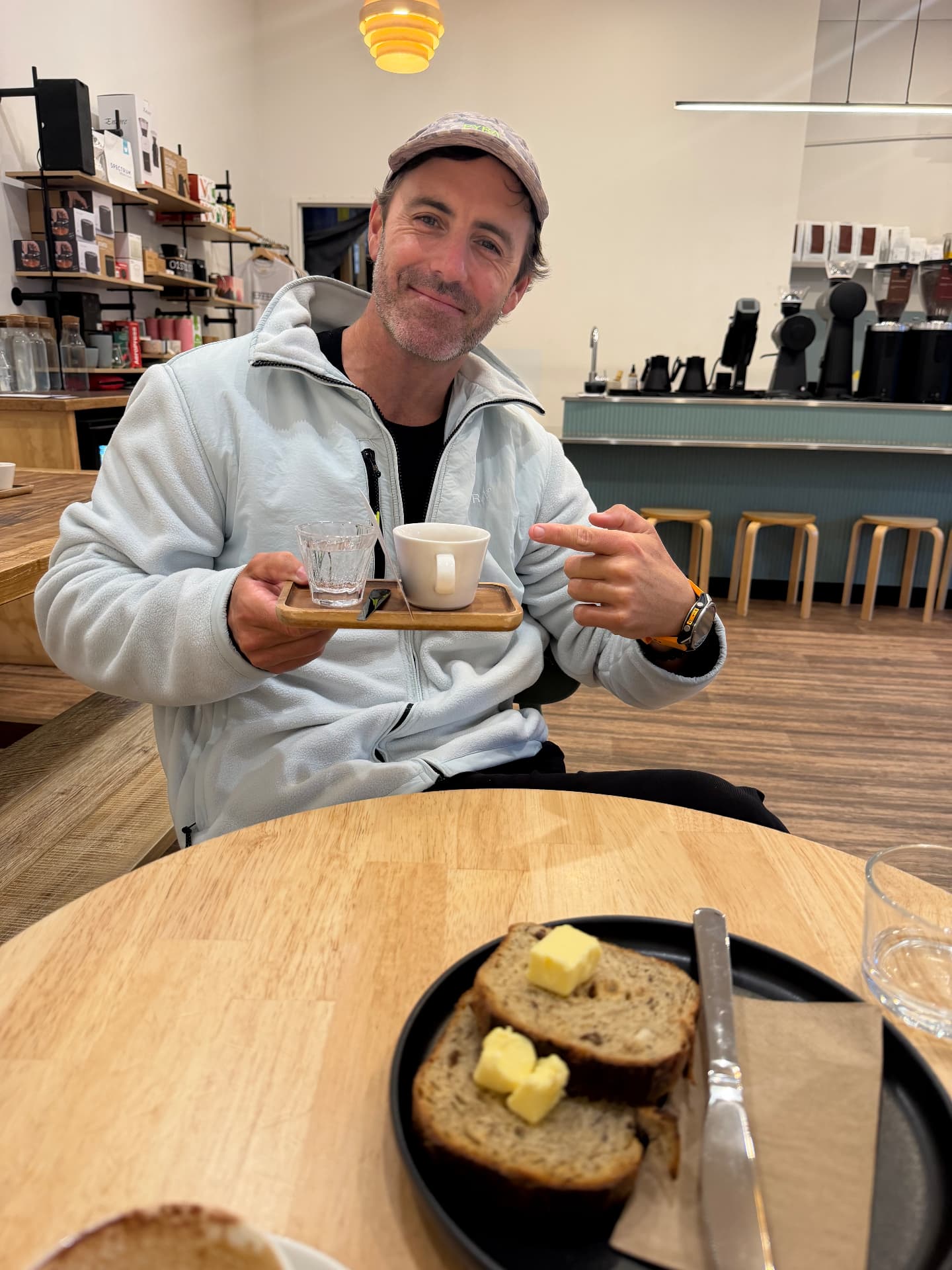
The first espresso of the day is not really about the caffeine. It is a signal. It tells my brain that the next block of time is for deep work: the hard thinking that moves a business forward. Everything before it is warm-up. Everything after it is execution.
I have run businesses across wellness, recovery, fitness and retail for the last 15 years. The common thread is not a tactic or a tool. It is the morning. If I protect the first 90 minutes, the rest of the day tends to take care of itself.
Why deep work matters more than hours 🧠
Cal Newport made the term famous, but the idea is older: real progress comes from long, uninterrupted stretches of cognitively demanding work. [1] Not email. Not Slack. Not the busy work that fills a calendar. The kind of work where one good decision can change the quarter.
The problem is that most founders never get it. The average knowledge worker is interrupted every 11 minutes, and it can take 20 minutes or more to return to the original task. [2] That is not a scheduling problem. It is a performance problem. Deep work is how you reclaim the thinking time that actually builds value.
The espresso is the opening ceremony ☕
Rituals work because they reduce decision fatigue. The brain loves a cue. When the same drink, in the same cup, in the same spot, precedes the same kind of work, the habit forms fast. The espresso becomes the on-switch.
I keep it simple. One double espresso. No milk. No phone until the cup is empty. The ritual takes five minutes, but it creates a boundary: before this, I am waking up. After this, I am working on things that matter.
Caffeine timing beats caffeine volume ⏱️
More coffee is not always better. Caffeine takes about 20 to 30 minutes to peak, which is why the "coffee nap" works: drink the espresso, set a 20-minute timer, close your eyes, and wake up as the effect kicks in. [3]
I use the timing deliberately. Espresso first. Then light. Then the hardest task of the day. Research backs the pairing: caffeine plus morning bright light is one of the most reliable ways to increase alertness and performance. [4] It is not complicated. It is just consistent.
My morning structure 📝
06:00. Wake, water, no phone. The first 10 minutes are for movement: walk, stretch, or a short breath session. The goal is to get the body online before the brain is asked to perform.
06:30. Espresso. This is the transition. While it brews, I review the one priority for the day. Not the list. The one thing.
06:35–08:00. Deep work block. Phone in another room. Notifications off. This is where strategy, writing, and the hard decisions live. If I can get 90 minutes here, the rest of the day is calmer.
08:00. Training. Gym, run, sauna. The physical work clears the residue from the mental work.
Why this works for operators 🎯
Founders do not burn out from working hard. They burn out from never switching off. A morning ritual creates a clean start. It gives you a win before the day has a chance to derail you. And it trains the people around you, team, family, investors, that the early hours are protected.
There is also evidence that morning routines and self-efficacy are linked: the people who start the day with a deliberate routine tend to perform better across the rest of it. [5] The ritual is not fluff. It is a performance tool.
Start smaller than you think 🚀
You do not need a 90-minute block tomorrow. You need one protected hour. One espresso. One hard task. Do that for two weeks and the ritual will start to own you, in a good way.
Build smart. Stay sharp. Sip the coffee. Then do the deep work.
References 📚
- [1]Newport, C. (2016). Deep Work: Rules for Focused Success in a Distracted World. Grand Central Publishing. The case for long, uninterrupted periods of cognitively demanding work.
- [2]Mark, G., Gudith, D., & Klocke, U. (2008). The Cost of Interrupted Work: More Speed and Stress. Proceedings of the 2008 ACM Conference on Human Factors in Computing Systems (CHI '08). Interruptions increase task time and stress; attention residue is real.
- [3]Reyner, L. A., & Horne, J. A. (1997). Suppression of Sleepiness in Drivers: Combination of Napping and Caffeine. Sleep Research, 26A. Caffeine peaks 20–30 minutes after consumption; timing matters more than volume.
- [4]Wright, K. P., Jr., Badia, P., Myers, B. L., & Plenzler, S. C. (1997). Combination of Bright Light and Caffeine as a Countermeasure for Impaired Alertness and Performance. Sleep, 20(3). Caffeine plus morning light is a reliable alertness intervention.
- [5]Ferris, G. R., Brown, D. J., Lian, H., Zhou, M., & Keeping, L. M. (2010). When Can Job Applicants Perform Better? The Role of Self-Efficacy and Morningness. Journal of Applied Social Psychology, 40(8). Morning routines and self-efficacy predict performance across the day.