
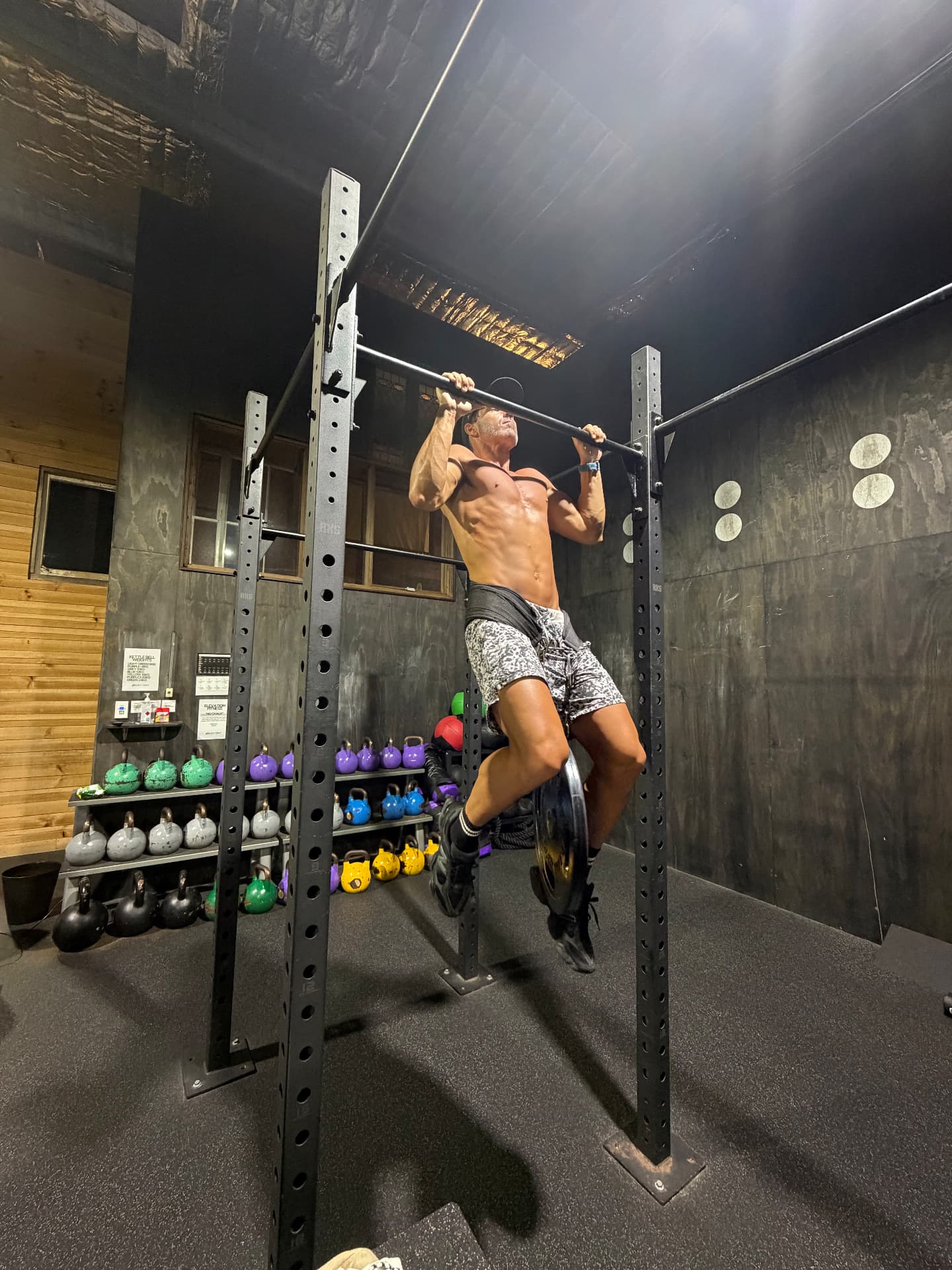
Some of the best time with friends does not happen across a dinner table. It happens when you have agreed to turn up, put in the work and get through something together.
Today's thought is simple: working out and doing hard things with friends is about more than the workout. It gives the friendship somewhere to live. A time in the calendar. A shared effort. Something to talk about that is not just what everyone has been doing for work.
Strength training, long days on foot, coffee and recovery are already part of my world. What interests me is how those things can bring people together, not just how they make us individually fitter or more productive.
A shared plan beats another vague catch up
“We should catch up soon” is easy to say and easy to leave there. A session on Saturday morning is something you can actually show up for.
It does not need to be an epic challenge. Lift together. Walk a hill. Join a class. Choose something that suits the people involved, then make the plan specific enough to happen.
The value is not that you have found another way to optimise your calendar. It is that friendship has a place in it. You are not waiting for a completely clear week before spending time with people you care about.
The hard part gives you something real to share
A difficult set or a long climb cuts through the polished version of ourselves. You do not need an impressive update. You have something immediate and ordinary in common: this is taking effort.
There is room for encouragement, a laugh and the admission that today feels harder than expected. Nobody needs to pretend every session is a personal best.
For me, that is a useful way to think about connection. Not a dramatic bonding exercise. Just time spent alongside someone, doing something that asks for a little commitment from both of you.
The goal can be physical. The part you value afterwards can be the company.
Good friends do not need to train at the same pace
Doing something together is not the same as doing identical work. Different fitness levels, different experience and different energy on the day are normal.
Choose a route that makes sense for everyone. Adjust the weight. Let someone take a break without making it a referendum on their character. Ask what kind of encouragement actually helps rather than assuming louder is better.
“Hard” should be relative to the person, not a test of belonging. Pain, dizziness, illness or an unsafe situation are reasons to stop and reassess, not moments to prove loyalty to the group.
The friend who helps you make a sensible decision is just as valuable as the friend who helps you finish a final rep.
Endurance makes the team lesson obvious
Long days on foot are part of my own journey. They are also the lens behind what ultra endurance taught me about business: pacing matters, preparation matters and there is no shortcut around the work.
When the effort is shared, there is another question worth asking. Are we making a plan that works for the group, or only for the strongest person in it?
That thought carries into work. I drive the growth and the team delivers the experience. A big goal means very little if the people carrying it do not have clear roles, realistic expectations and support when the day gets difficult.
A workout is not a substitute for good management. But it can be a useful reminder that encouragement and listening belong together. Helping someone move forward does not always mean asking them to push harder.
Leave time for the part after the session
The coffee afterwards. The walk back. The conversation that has nothing to do with the numbers on a watch.
That time deserves a place too. If every session ends with everyone sprinting to the next obligation, you can miss the very thing that made training together appealing.
It is the same thread that runs through my writing about third spaces and sauna and community. The activity gives people a reason to arrive. The room around it gives them a chance to connect.
Recovery does not have to become another challenge either. Sometimes food, rest and an unhurried chat are enough.
Invite someone, not just the usual crew
A good training group should be something people can enter, not a club they have to earn their way into. Think about the friend who has mentioned wanting to start, or the person who is new to the area.
Offer a clear, manageable invitation. Tell them what you are planning and make it easy to say no. No surprise endurance event disguised as a casual morning out.
Not every friendship needs to revolve around exercise. A coffee or a gentle walk might be the right plan. The point is making room for people, not requiring them to share your favourite kind of discomfort.
Make the next plan simple
- Invite a friend to something you both genuinely want to do.
- Agree on a time and an effort that suits both of you.
- Leave room to change the plan if someone needs to.
- Keep a little time afterwards for food, coffee or a conversation.
There is a connection here to yesterday's reflection on making the effort. A good life is not only about the big milestones. It is also about the people you keep showing up for, and the ordinary plans you actually keep.
Choose a worthwhile challenge. Bring good company. Make room for each other.
A personal perspective
Inspired by working out and doing hard things with friends, and grounded in Jordan's existing writing about training, endurance, community and team-led growth. This is a personal reflection, not a claim that shared exercise guarantees stronger friendships or better business results. The photograph shows Jordan training, not a documented group session.