
The lazy take on founders backing each other
Every time a well-known founder launches something, the same thing happens. Their mates share it, the comments fill up, and someone inevitably calls it a closed club.
I get the frustration. But I think it's completely backwards.
Of course people who've built things together back each other. They've sat across the table through the hard years, swapped notes and solved problems for one another. That's not a racket. That's what a real network looks like from the outside.
Here's the part people miss: if you resent something, you'll never build it. Treat every show of support as a grift and you've quietly trained yourself out of the one behaviour that compounds most in business.
Nobody was anybody when it started
The networks you see now didn't start powerful. They started as a few people at the same stage, who liked each other and kept showing up.
One grew a business. One built an audience. One landed a deal that opened doors for everyone else. Ten years later it looks like an inner circle. At the start it was just a coffee that turned into a monthly catch-up.
That's the whole trick. You don't join a powerful network. You build one with people before anyone in it is powerful, and you let time do the rest.
What it's looked like for me
Almost everything I'm building today traces back to a relationship that started small.
Vela came straight out of this. We kept seeing the same gap: business owners craving time around other people like them, and the kind of experiences you can't get sitting behind a laptop.
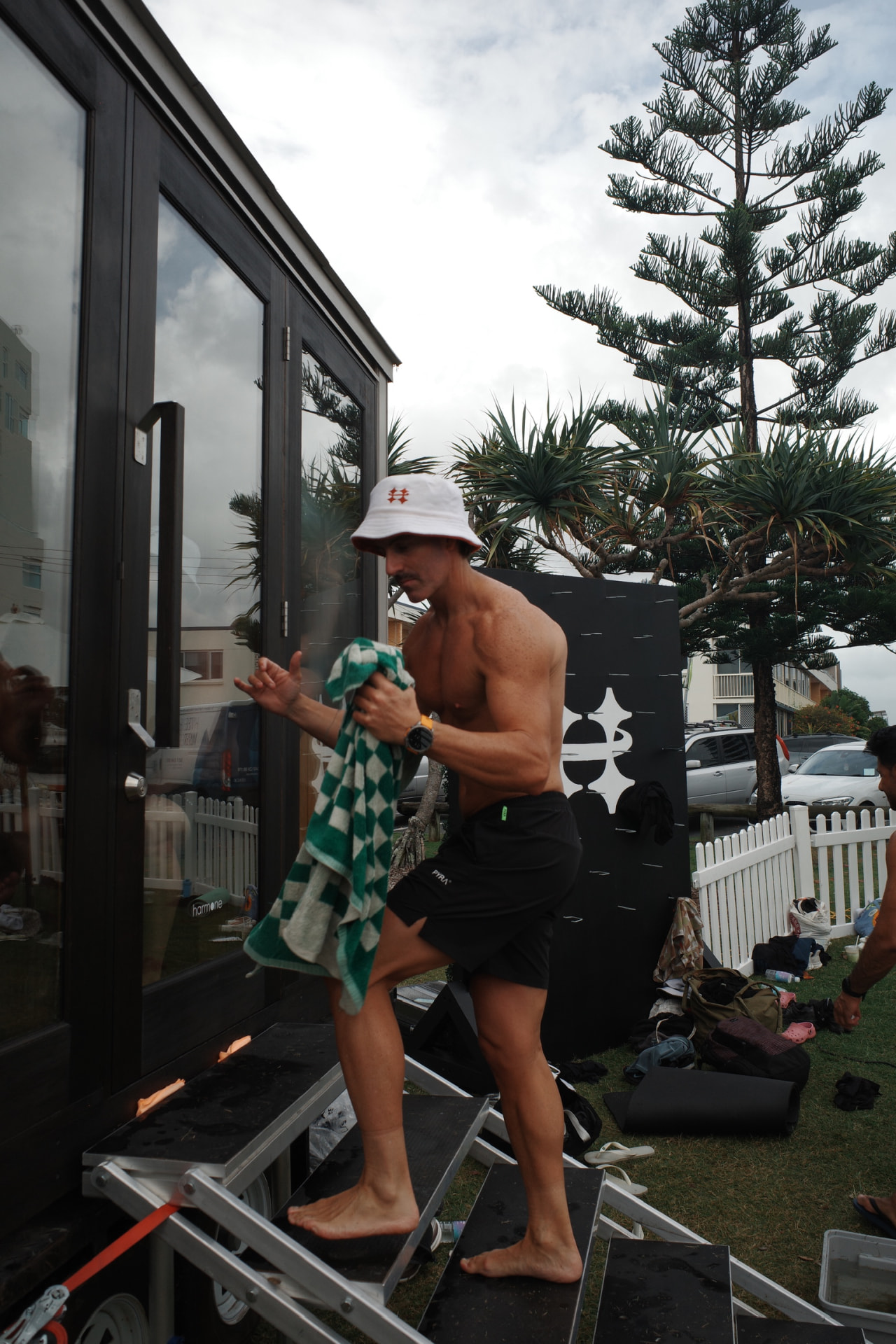
Running a business is hard. It eats your time, and it can be lonely. So we built a half-day experience where founders get together and do the things that actually support longevity and wellbeing, side by side. Better conversations happen in a sauna than in a boardroom.
P3 is the clearest example. I didn't start there as a founder. I started as a paying member, turning up for my own recovery like everyone else. Then I went to a community event, got talking, and met the people who'd become my co-founders. I joined the founding team from there, and today P3 is the biggest recovery and wellness franchise network in Australia.
Hi Vibe Water came out of that same community. It wasn't a cold pitch or a deal I went hunting for. It grew from being around the right people, in the same rooms, often enough that working together felt obvious.
None of it was strategic in the moment. It was ordinary: say yes to the coffee, follow up, help where you can. The value only became obvious years later.
The Gold Coast wellness and performance scene is still small enough that this works. The operators, coaches and founders grinding away right now are the people who'll be running the industry in five years.
How to start this week
You don't need an audience, a big business or rich friends. You need a few people at your stage and the discipline to stay in touch.
- Pick five people who are building something you respect and are roughly where you are now.
- Reach out with something useful, not a pitch. An intro, a resource, honest feedback on what they're making.
- Put a recurring catch-up in the calendar. Monthly or quarterly. Consistency beats intensity, same as training.
- Back their stuff publicly. Share the launch. Show up to the event. Be the person who cheers early.
- Play the long game. Judge it in five years, not five weeks.
The people who matter most haven't met you yet
Somewhere on this coast, someone is opening their first studio, launching their first product or posting their tenth piece of content to nobody. In a few years they'll be someone you'd love to know.
Right now, they're one message away.
Send it.
For more on building alongside the right people, read the third space and why I started Plexo.